
Explanation of Research Results by Researchers Specializing in the Prevention, Disinfection, and Sterilization of Infectious Diseases
Japan Restroom Industry Association commissioned researchers who are active on the front lines specializing in the prevention, disinfection, and sterilization of infectious diseases to conduct research on the use of bidet toilets and hand hygiene.
The results of the research have been posted as a summary, but we have written an article that explains the contents in a more easy-to-understand manner.

Contribution to the Prevention of Infections...
The Number of germs contaminating hands is significantly reduced
Through the use of bidet function...
Dr. Shigeharu Oie
Sanyo-Onoda City University, Professor, Faculty of Pharmacy; Tokyo Healthcare University, Guest Professor, Postgraduate School. FY2012 Chairman Annual Meeting of the Japan Society for Environmental Infectious Diseases. Specializes in investigating the causes of nosocomial infection and hygiene management in hospitals. He is involved in producing guidelines, etc., for administrative organizations such as the Ministry of Health and Welfare and has authored "Guidelines for disinfection and sterilization", "Book on Disinfection and Sterilization that can be used in Hospital Wards" and "How to choose and use disinfectants".

1. When microorganisms from feces adhere to your hands and fingers...
It is known that microorganisms attached to the hands and fingers during defecation can cause intestinal infections when they enter the mouths of other humans via food or environment. Various intestinal infections such as norovirus gastroenteritis, enterohemorrhagic E. coli infection, dysentery, cholera, and hepatitis A may occur.
For example, a food handler with subclinical norovirus infection (infected but asymptomatic) spread the norovirus when inspecting bread and as a result, many as 1,271 students who ate the school lunch bread developed norovirus gastroenteritis (Illustration 1.).
Illustration 1.Insufficient Hand Washing after Defecation Caused 1,271 Cases of
Norovirus Gastroenteritis.

In regards to the number of sheets of toilet paper, it is understood that most people on average wipe with four layers of toilet paper after defecation (Graph 1. Illustration 2.).
Click + for Graph 1.
Graph 1. Number of layers of toilet paper used to wipe buttocks
(Japan Sanitary Equipment Industry Association)
[Total of men and women, total users and non-users of bidet toilets,
single and double total, n=1,748]
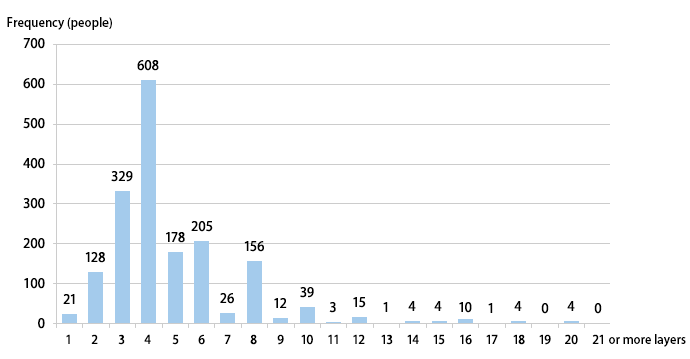
Illustration 2. 4 Layers of toilet paper
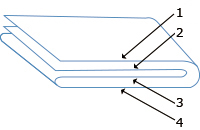
However, microorganisms in feces can easily pass through four layers of folded toilet paper. This is because even with four layers, there are many porous openings that are about 100 times the size of bacteria (Figure 1).
Figure 1. Microscope photo of 4 layers of toilet paper (35x)
There are many porous openings about the size of 0.1mm in diameter
(about 100 times the size of bacteria).

2.Bacteria attached to your hands and fingers after defecation are significantly reduced
by using the toilet's bidet function!
It was discovered that using the toilet's bidet function significantly reduced the bacteria contaminating the hands and fingers after defecation compared to not using the function (Oie et al. Japanese Journal of Infectious Disease 2018, Oie et al. Journal of Water Health 2022). First, a wiping test using a model of buttocks plus artificial feces mixed with bacteria was used to simulate the condition after defecation to determine how much bacteria would adhere to hands. The results showed that when the bidet function was used, the number of germs on hands was less than 1/10,000 times lower than when not used (Figure 2).
Figure 2. Culture Comparison Example - Color red indicates growth of bacteria
(Serratia marcescens) 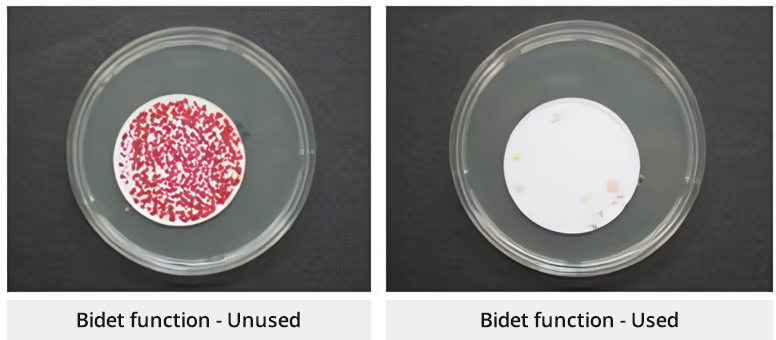
Next, with the cooperation of 32 nursing students, the number of bacteria on hands and hands and fingers after defecation was investigated depending on whether or not the bidet function was used.
The results showed that the average value was 40,000 bacteria/hands and fingers when unused, and 4,200 bacteria/hands and fingers when used (Table 1).
Using the bidet function reduced the number of bacteria contaminating hands to approximately 1/10. The duration and water pressure (high, medium, or low) for washing the buttocks were left up to each individual in this study.
Click + for Table 1 of results
Table 1. Microbial contamination of hands and fingers with and without the use of bidet function*1
| Participant number | Number of bacteria/hands and fingers | Gender | Water force of bidet function | Usage time of the bidet function (seconds) | |
|---|---|---|---|---|---|
| bidet function unused(cfu*3/gloves) | bidet function used(cfu*3/gloves) | ||||
| 1 | 4.1×10⁵ | 5.4×10⁴ | Male | High | 30 |
| 2 | 1.7×10⁵ | 664 | Male | Low | 30 |
| 3 | 1.0×10⁵ | 3.4×10⁴ | Male | Low | 80 |
| 4 | 8.5×10⁴ | 2.4×10⁴ | Male | Medium | 30 |
| 5 | 7.8×10⁴ | 131 | Male | High | 20 |
| 6 | 7.2×10⁴ | 115 | Female | Medium | 5 |
| 7 | 7.1×10⁴ | 328 | Female | Low | 30 |
| 8 | 5.6×10⁴ | 38 | Female | Medium | 15 |
| 9 | 2.4×10⁴ | 310 | Male | High | 30 |
| 10 | 2.4×10⁴ | 720 | Male | Medium | 30 |
| 11 | 2.2×10⁴ | 5 | Male | Medium | 10 |
| 12 | 2.1×10⁴ | 7.2×10³ | Male | Medium | 25 |
| 13 | 1.8×10⁴ | 352 | Female | Medium | 10 |
| 14 | 1.7×10⁴ | 816 | Female | Medium | 30 |
| 15 | 1.7×10⁴ | 4.8×10³ | Male | Medium | 15 |
| 16 | 1.5×10⁴ | 1.0×10³ | Male | High | 30 |
| 17 | 1.4×10⁴ | 420 | Male | Medium | 30 |
| 18 | 1.1×10⁴ | 66 | Male | High | 45 |
| 19 | 1.0×10⁴ | 134 | Male | Medium | 60 |
| 20 | 7.0×10³ | 1.5×10³ | Female | Low | 40 |
| 21 | 5.0×10³ | 848 | Female | High | 30 |
| 22 | 4.0×10³ | 172 | Female | Low | 30 |
| 23 | 4.0×10³ | 360 | Male | Medium | 10 |
| 24 | 2.0×10³ | 38 | Male | High | 20 |
| 25 | 2.0×10³ | 15 | Female | Medium | 20 |
| 26 | 2.0×10³ | 63 | Male | Medium | 30 |
| 27 | 1.0×10³ | 29 | Female | Low | 30 |
| 28 | 1.0×10³ | 265 | Female | Medium | 50 |
| 29 | 320 | 97 | Female | Medium | 24 |
| 30 | 244 | 18 | Female | Low | 60 |
| 31 | 228 | 124 | Female | Medium | 30 |
| 32 | 184 | 75 | Female | Medium | 20 |
| Average ± standard deviation *2 | 39,499.3 ± 77,768.3 | 4,146.9 ± 11,427.7 | |||
*1 Four layers of toilet paper were used after defecation. Additionally, the outer gloves of the double-layer gloves were checked for contamination.
*2 Significant difference found [p < 0.00001 (Wilcoxon signed-rank test)]
*3 Colony Forming Unit abbreviation, Number of colonies (populations) formed by culturing bacteria in a medium.
Click here for the research results overview page
3.Bidet function contributes to improving public health
In principle, hands should be thoroughly washed after defecation however, there are many instances where hands are not washed sufficiently or properly. Therefore, the water spray function that cleans the buttocks, such as the bidet, which can greatly reduce adhesion of fecal-derived microorganisms to hands(Illustration 3). If in the future the bidet function proliferates throughout the world, it could greatly contribute to improving public health.
Illustration 3. When the bidet function is used, the number of bacteria on the hands and fingers is significantly reduced.

References
1) Yuji Tsuchiya, Atsushi Sahara, Tatsuya Jimbo, others. Case study of norovirus mass food poisoning caused by bread. Journal of the Japanese Society of Food Microbiology. 32: 153-158, 2015.
2) Oie S, Aoshika H, Arita E, Kamiya A. The use of electric toilet seats with water spray is efficacious in maintaining hand hygiene in experimental model. Jpn J Infect Dis. 71: 306-308, 2018.
3) Oie S, Kawai S. Microbial contamination of hands with or without the use of bidet toilets (electric toilet seats with water spray) after defecation. J Water Health. 20: 21-71-275, 2022
